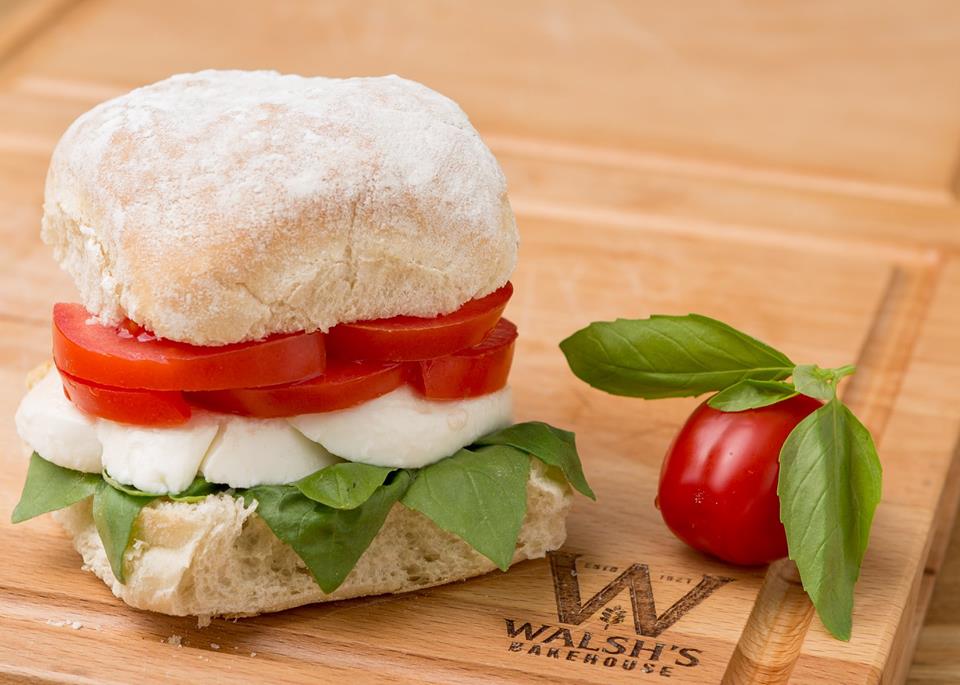
There is a bread roll that exists only in one city in Ireland. It is soft, slightly flattened, generously dusted with white flour, and it must be eaten fresh — ideally within an hour of leaving the oven, certainly within the same morning. It is called the blaa, it belongs to Waterford, and eating one is as good a way as any to understand the city you’re in.
The History
The blaa’s origins lie in the late 17th century, when Huguenot refugees — Protestants fleeing religious persecution in France — settled in Waterford and brought their baking traditions with them. The word “blaa” is thought to derive from the French bla, meaning pale or white, a reference to the distinctive flour dusting that makes the roll immediately recognisable. Over the generations the blaa became entirely localised — a Waterford thing, made by Waterford bakers, sold in Waterford shops, understood by Waterford people and baffling to everyone else.
In 2013, the blaa was awarded Protected Geographical Indication (PGI) status by the European Union — the same protection that applies to Champagne, Parma ham, Melton Mowbray pies and a small number of other food products whose identity is inseparable from their place of origin. To be called a Waterford blaa, a roll must be baked in the county of Waterford using the traditional recipe and method. The protection is taken seriously by the bakers and by the city.
What Makes It Special
The blaa is a white bread roll made from a yeast dough, proved slowly and baked at high heat to achieve a crust that is thin and yielding rather than crisp. The interior is soft, pillowy and slightly doughy — denser than a standard bread roll but not heavy. The white flour dusting on the exterior is characteristic and functional: it prevents the rolls from sticking together when they are stacked fresh from the oven. Eaten warm, with butter melting into the interior, a good blaa is one of the simple pleasures of Irish food culture.
How to Eat One
The standard Waterford approach is split and filled: butter, and then ham, or a fried egg, or both. Cooked breakfasts in Waterford are routinely served with a blaa rather than toast. The Saturday farmers’ market on the quays generally has a baker selling blaas warm from the oven, which is the best place to buy them if you’re visiting at the weekend. During the week, the four traditional bakeries — Walsh’s, Hickey’s, Griffin’s and the Barron’s — supply the city’s cafes, shops and delis. Ask any local where to get the best one; you will get a strong and possibly defensive opinion.
The Blaa as Cultural Marker
In Waterford, the blaa is not just a bread roll — it is a marker of identity. Waterfordians who have moved away will go to considerable lengths to source blaas when they visit home, and the response of visitors from outside the county when they first encounter one (curiosity, scepticism, then usually conversion) is a familiar and enjoyed ritual. No food product in Ireland more purely belongs to one place. Eating a blaa is, in the most literal possible sense, tasting Waterford.
The Waterford Blaa features in our guide to the Top 15 Things to Do in Waterford.