The Bishop’s Palace sits at the top of Cathedral Square in a handsome 18th-century building that was, for over a century, the official residence of the Church of Ireland Bishop of Waterford and Lismore. Today it is a museum covering 300 years of Waterford life — from the elegant Georgian decades of the 1700s through Victorian prosperity, wartime austerity and into the 1970s — and it contains one of the most eclectic and absorbing collections of objects in any Irish regional museum.
The Collection
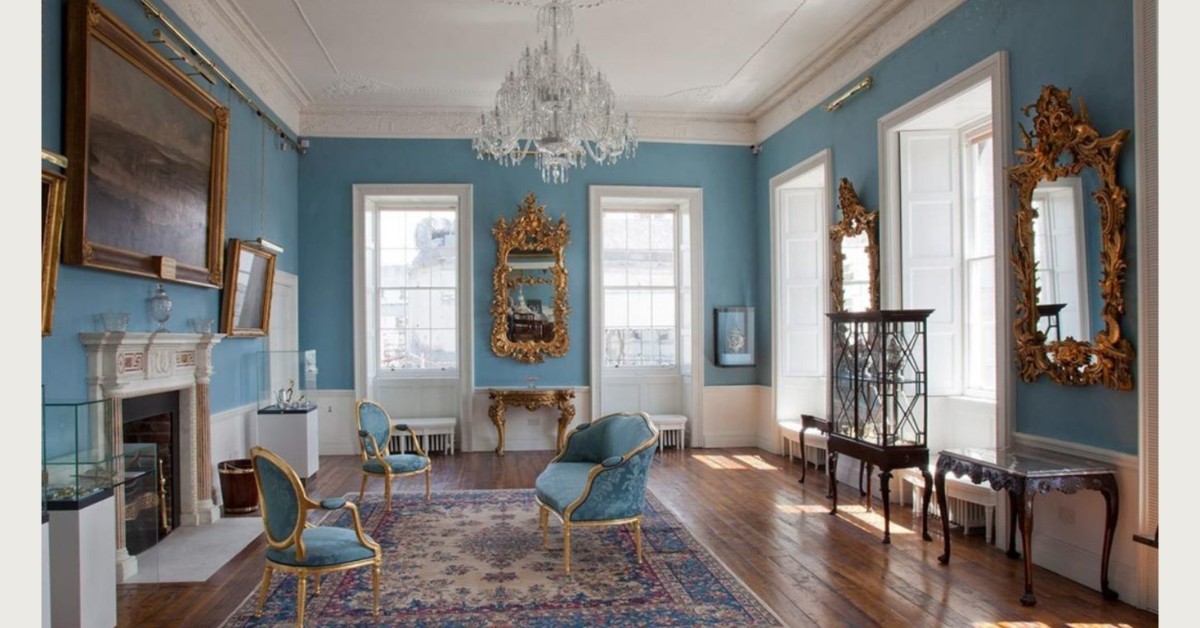
The museum works chronologically, with rooms representing different periods of Waterford history. The Georgian rooms are furnished with genuine period pieces — furniture, silverware, portraits and mirrors that would have been familiar to the wealthy merchant families who shaped the city in the 1700s and early 1800s. The 1802 Waterford Crystal chandelier hanging in the main reception room is the oldest surviving example of Waterford Crystal in existence, and seeing it in a domestic setting — as it was always intended to be seen — is a reminder of how extraordinary the work of those early craftspeople was.
Among the unexpected highlights is a lock of Napoleon Bonaparte’s hair, presented to the museum as part of a private bequest. It sits in a small locket, unremarkable to look at, but the label stops visitors short. The palace also holds a collection of decorative arts, glassware, ceramics and personal objects that bring the domestic life of Georgian Waterford vividly to life.
The Reenactors
One of the things that sets the Bishop’s Palace apart from a conventional museum experience is the presence of costumed reenactors throughout the building. These are not people in costumes handing out leaflets — they are trained guides who inhabit the characters of historical Waterford residents and engage visitors in conversation about the lives, concerns and gossip of their respective periods. It sounds gimmicky; in practice it is genuinely engaging, particularly for younger visitors who find conventional museum interpretation less compelling.
The Building Itself
The palace was designed by the German-born architect Richard Cassels — the same architect responsible for Leinster House, Powerscourt and Russborough. It is one of the finest Georgian town houses remaining in Munster, and the proportions of the rooms, the quality of the plasterwork and the elegance of the staircase are worth paying attention to regardless of what is displayed within them.
Practical Information
The Bishop’s Palace is on Cathedral Square in the Viking Triangle, a two-minute walk from the Medieval Museum. It is included in the Waterford Treasures combined ticket. Allow 60 to 90 minutes. The building is fully accessible. Guided tours with the reenactors run at set times — check the Waterford Treasures website for the current schedule.
The Bishop’s Palace features in our guide to the Top 15 Things to Do in Waterford.